


Go to Section
Share on

Shopify dropshipping is a highly flexible and low-risk business model that enables entrepreneurs to start their own businesses with little upfront investment. Shopify — the world’s leading eCommerce platform — enthusiastically supports dropshipping and makes it easy for entrepreneurs to set up their own online dropshipping stores. In this guide, we’re going to show you everything you need to know about dropshipping through Shopify. Read on to find out how dropshipping Shopify stores make this business model work for them.
What Is Dropshipping?
Dropshipping is a business model in which eCommerce entrepreneurs sell products without carrying any inventory. Dropshipping businesses don’t need to worry about warehousing or shipping products — they can simply focus on finding and promoting products and selling them online. This doesn’t mean Shopify dropshipping merchants can just sit back and relax once their store is set up. They still need to invest time and effort into marketing their business, acquiring customers, managing order issues, and providing great customer service.
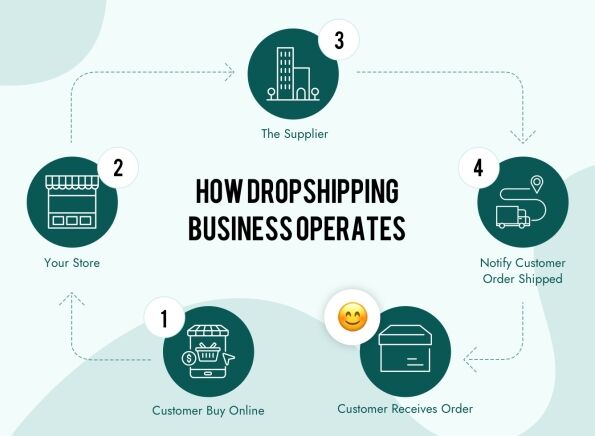
This is how a dropshipping business typically operates:
Step one: A customer places an order for a product on your online store
Step two: Your store processes the order and automatically contacts the supplier
Step three: The supplier ships the product directly to your customer
Step four: Your store notifies the customer that their order has been shipped
Step five: The customer receives their order and is happy
Dropshipping businesses can be run completely online, making it a very attractive option for entrepreneurs looking to start their own businesses with little overhead.
How to Open a Shopify Dropshipping Store
Now that we’ve covered the basics of dropshipping, let’s take a look at how you can start dropshipping with Shopify below.
Step 1: Decide on a Niche
Before you start dropshipping through Shopify, it’s important to choose a niche that you’re passionate about or have some knowledge in. This will make starting your store easier, and your knowledge and experience will be a solid foundation for a more successful long-term business.
Think about what kind of products you’d like to sell and the people you’d like to sell them to. Do some research on your chosen niche and look for any gaps in the market that you could fill. Once you’ve decided on a niche, you can move on to setting up your Shopify store.
Step 2: Choose a Store Name and Domain
Now it’s time to choose a name for your store and get your domain. Your store name should be catchy, unique, and relevant to the products you’re selling. Choose carefully because your entire branding will be based on your store name. Once you’ve settled on a name, head over to Shopify to start setting up your account and dropshipping through Shopify.
Step 3: Set Up Your Shopify Store
Now for the fun part — it’s time to start setting up your Shopify store! If you’ve never used Shopify before, don’t worry — it’s very easy to use. Simply follow the steps in the Shopify setup wizard and you’ll have your store up and running in no time at all.
To register your domain, you can enter your store’s name into the “Domain” section. Shopify will then generate a list of available domain names for you to choose from. If your preferred domain name is not available, you can try different variations.
Step 4: Optimize Your Settings
Now that your Shopify dropshipping store is set up, it’s time to start optimizing your settings. The first thing you should do is establish your store’ policies. This includes your refund policy, shipping policy, and privacy policy. You can find templates for these policies online, or you can write your own. Be sure to include all the important details such as shipping times, return periods, and accepted payment methods.
You should also decide how you will set your shipping rates. You can either charge a flat shipping rate, offer free shipping, or use Shopify’s real-time shipping calculator to calculate rates based on the customer’s location.
Step 5: Customize Your Shopify Store’s Theme and Design
Now it’s time to customise your store. You can choose a free or paid theme from the Shopify Theme Store and adapt elements such as your logo, colours, fonts and imagery to match your brand.
Shopify Magic can also assist at this stage. Depending on your store’s eligibility, it can generate personalised theme options, create or edit media, produce text and generate custom theme blocks from prompts. These features can reduce some of the initial setup work, but all AI-generated content and blocks should be reviewed and tested before publication.
Custom Shopify development may be more suitable when your business requires a distinctive user experience, advanced functionality, third-party integrations or greater control over website performance.
If you need support with a more tailored build, you can hire Shopify developers from Vsourz.
Step 6: Start Dropshipping with Shopify
Now that your store is all set up and ready to go, it’s time to start dropshipping with Shopify. The first thing you need to do is find suppliers for the products you want to sell. Research each supplier carefully to make sure they’re reputable and reliable.
Once you’ve found a few good dropshipping suppliers for Shopify, contact them and ask if they’re willing to work with you. Be sure to let them know that you’re dropshipping and how it works. If you find a supplier that’s willing to work with you, it’s time to start adding products to your store.
Step 7: Dropship on Shopify with Third-party Apps
Some Shopify dropshipping stores use third-party apps to manage product sourcing and order fulfilment. Depending on the app, these tools can import product information, synchronise inventory and pricing, forward orders to suppliers, and update fulfilment and tracking details.
Some dropshipping apps also include AI-assisted features for product research, content generation and supplier recommendations. These features can help merchants assess product opportunities and manage their catalogues more efficiently. Merchants should review AI-generated recommendations and product content before using them.
Costs vary between apps. Some offer free plans, while others charge monthly subscriptions, usage-based fees or transaction fees. Review each app’s pricing, supported suppliers, features and integration requirements before installing it on your Shopify store.
Step 8: Launch and Market Your Store
Once your Shopify dropshipping store is live, the next step is to attract the right audience and turn visits into sales. A strong marketing plan can combine several channels rather than relying on one source of traffic.
You can focus on SEO and product-led content to improve organic visibility, email marketing and abandoned-cart campaigns to bring potential customers back, and organic or paid social media to reach new audiences. Google Shopping can also support product discovery, while influencer partnerships may be useful for certain niches.
Customer reviews, analytics and customer data can help you understand what is working and where improvements are needed. Over time, retention campaigns and repeat-purchase strategies can also help increase the value of existing customers rather than depending only on new customer acquisition.
Shopify and Dropshipping — The Perfect Combination
Dropshipping requires a reliable platform that can support a rapidly growing business, and Shopify is the perfect solution. While there are a number of eCommerce platforms available, Shopify is ideally suited for dropshipping businesses for several reasons as outlined below.
Welcoming Environment
Dropshippers are more likely to be successful if they choose a platform that’s welcoming to their business model. Shopify is one of the most dropshipper-friendly platforms available, with a number of features and apps that are designed to make life easier for dropshipping Shopify stores. Many merchants choose to use third-party Shopify dropshipping apps to automate their business model and streamline their operations.
Excellent Features
Shopify’s highly customisable and flexible platform is perfect for businesses of all types, including dropshipping businesses. Designing a unique and on-brand store is simple with the platform’s page builder and theme editor. If you start dropshipping through Shopify, you’ll also have access to powerful tools including advanced analytics and reporting, abandoned cart recovery, and built-in SEO features.
User-friendly Interface
Creating a website can be a daunting task, but Shopify’s user-friendly interface makes it easy to build a beautiful and functional store, even if you have no prior experience. There are several third-party simple drag-and-drop page builders that make it easy to add products, images, and other content to your store without having to code.
If you’re not sure how to get started, you will find tons of step-by-step “dropshipping with Shopify” tutorials and instructional videos online that guide you through the website-building process.
Low-cost Launching
Shopify offers several pricing plans to suit businesses at different stages, from new stores to more established eCommerce operations. As pricing can change depending on billing terms, promotions and region, it is better to check Shopify’s current pricing page for the latest plan details.
If you’re just starting out, the entry-level Shopify plan may provide the core features needed to launch and manage a dropshipping store, while higher-tier plans offer additional tools and capabilities as the business grows.
One-stop Solution
Shopify is a one-stop solution that takes care of everything from hosting to security to payment processing. This is extremely valuable for dropshippers who want to focus on running and growing their business, without having to worry about the technical aspects of running an online store.
Global Reach
Shopify gives dropshipping businesses the ability to sell across multiple international markets, but successful global selling involves more than offering different currencies or translated content. Merchants also need to consider which markets they want to target, how products and content should be localised, which payment methods customers expect, and how duties and taxes are handled.
Shipping availability and supplier delivery times are equally important, especially when products are fulfilled from different countries. Setting clear expectations around delivery, costs and market-specific requirements can help create a better experience for international customers.
Easy Experimentation
Shopify makes it easy to experiment with your store design and layout without affecting your live website. This is valuable for dropshippers that want to test out different store designs and see what works best for their business.
With Shopify’s duplicate function, you can create a copy of your live store and make changes to it without affecting your live website. You can easily add and remove products, change your theme, and experiment with different layouts to see what works best for your business.
Fulfil Orders in a Few Clicks
There are many integrated Shopify dropshipping apps that make it easy to add products to your store and fulfil orders in just a few clicks. Meanwhile, you can focus on your branding, suppliers, marketing, and other important aspects of running your business.
Start Dropshipping with Shopify Today
If you’re looking for a dropshipping platform that’s user-friendly, powerful, and scalable, Shopify is the perfect solution for you. With Shopify, you’ll be able to launch and grow your business with ease, without having to manage stock, fulfil orders, run a warehouse, or handle packaging and shipping. By outsourcing all these elements to a third party, you can focus on establishing your brand and marketing your products.
Dropshipping necessitates careful study and planning, but with Shopify as your eCommerce platform, you can give your business the foundation it needs to succeed. You can hire Shopify developers from Vsourz if you would like assistance setting up your shop. Our Shopify agency has a team of experienced Shopify developers who are on hand to help you get started. Contact us today to find out more about how we can help you launch and grow your very own Shopify dropshipping business.
